Understanding the nuances between carving, pumping, and rail engagement is essential for surfers aiming to elevate their wave-riding skills. Whether you’re a beginner looking to grasp fundamental maneuvers or an advanced surfer refining your style, knowing how these techniques function and differ can transform your surfing experience. This article provides a clear, comprehensive guide to these key surf techniques, helping you optimize your performance and select the best approach for your style.
What Is Carving in Surfing?
Defining Carving
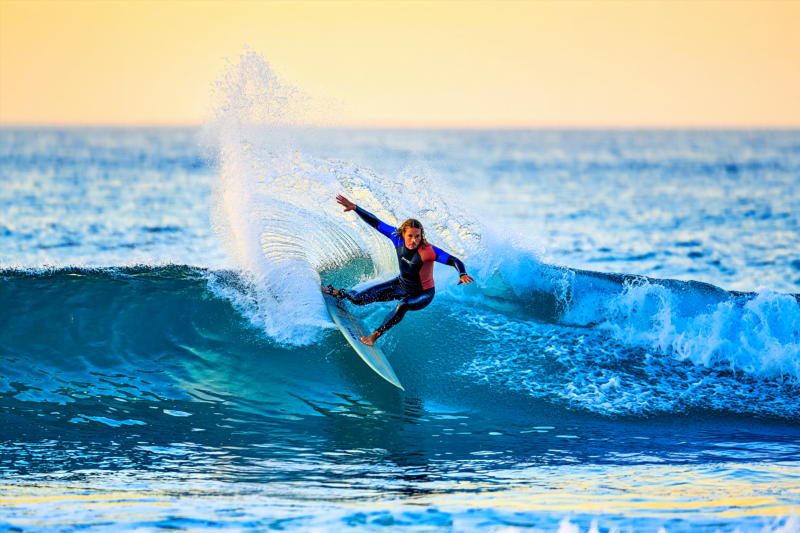
Carving is a fluid, controlled maneuver involving making curved turns along the face of the wave. It emphasizes precision, style, and the ability to maintain speed while navigating across the wave’s face.
How Carving Works
- Body Position: Leaning into the turn with your weight shifted towards the inside rail.
- Board Dynamics: Using rail engagement to tilt the board and create a clean arc.
- Purpose: To generate fluid, stylish turns that redirect your momentum smoothly.
Benefits of Carving
- Enhances control and stability.
- Adds style points to your ride.
- Allows for continuous, seamless surfing along the wave face.
Common Carving Techniques
| Technique | Key Features | Ideal for |
| Classic Carves | Large, smooth arcs | Intermediate and advanced |
| Drawn-out turns | Extended, flowing turns | Advanced surfers |
What Is Pumping in Surfing?
Defining Pumping
Pumping is a dynamic motion that increases speed by generating rhythmic, up-and-down movements or quick shifts on the wave. It is critical for maintaining momentum in sections where the wave slows down.
How Pumping Works
- Body Movements: Bending knees and shifting weight to create oscillation.
- Board Dynamics: Using rapid body and weight shifts to push the wave’s energy.
- Purpose: To ‘pump’ up speed, especially in flat or mature wave sections.
Benefits of Pumping
- Extends the wave ride length.
- Generates speed where wave energy diminishes.
- Permits critical maneuvers by maintaining flow.
Pumping Techniques
| Technique | Key Features | Best For |
| Vertical pumping | Up-and-down motion to generate speed | Small to medium waves |
| Body shifting and compression | Rapid weight shifts for acceleration | Large waves and steep sections |
What Is Rail Engagement?
Defining Rail Engagement
Rail engagement refers to the way a surfer uses the rails (edges) of the surfboard during maneuvers. Proper rail engagement determines the turning radius, grip, and overall control on the wave face.
How Rail Engagement Works
- Board-Terrain Contact: The degree to which the rails dig into the wave face.
- Body Mechanics: Shifting weight and angling the board to maximize rail contact.
- Purpose: To facilitate sharper, more controlled turns and maneuverability.
Benefits of Rail Engagement
- Improves tight, technical turns.
- Provides grip on the wave face for aggressive maneuvers.
- Enhances responsiveness and control.
Types of Rail Engagement
| Type | Characteristics | Suitable For |
| Moderate Rail | Balanced flex and grip for versatile riding | General surfing |
| Hard Corner Rail | Sharp, deep engagement for tight turns | Advanced, performance surfing |
Comparing Carving, Pumping, and Rail Engagement
| Aspect | Carving | Pumping | Rail Engagement |
| Primary Purpose | Creating smooth, stylish turns | Increasing and maintaining speed | Controlling direction and maneuver sharp turns |
| Body Movement | Leaning and shifting to make curved turns | Bending knees, rapid weight shifting | Angling and shifting weight for tight grip |
| Wave Interaction | Utilizes rail for precision and style | Utilizes vertical motion and body oscillation | Explores rail grip for quick, responsive turns |
| Best suited for | Power turns, stylish lines | Speed generation on slow or flat sections | Tight turns, advanced maneuvers involving control |
How to Improve Your Technique
Tips for Mastering Carving
- Practice controlled weight shifts.
- Focus on smooth arco turns.
- Use your hips and shoulders to guide the board.
Tips for Pumping Effectively
- Develop rhythm with your knee bends.
- Practice on smaller, predictable waves.
- Coordinate body movements with board response.
Enhancing Rail Engagement
- Experiment with different rail setups.
- Practice tight turns in controlled environments.
- Focus on shifting weight and managing pressure precisely.
Why Understanding These Techniques Matters
Mastering carving, pumping, and rail engagement allows surfers to:
- Adapt better to different wave conditions.
- Play with style and creativity.
- Improve endurance and consistency.
- Progress from basic maneuvers to advanced, high-performance surfing.
Frequently Asked Questions (FAQs)
Are carving and rail engagement different?
Yes. Carving involves making smooth, arced turns primarily using rail engagement, but it emphasizes style and control. Rail engagement is a technique used within carving and other maneuvers to grip the wave face and execute turns sharply.
How can I learn to pump better?
Start with rhythm exercises on smaller waves, focusing on bending your knees and shifting your weight smoothly. Gradually increase speed and try to synchronize your body movements with the wave’s energy.
Can I combine these techniques?
Absolutely. Effective surfing often involves combining carving, pumping, and proper rail engagement for smooth, fast, and controlled rides. For instance, you might carve into a turn, pump to gain speed, and engage rails for a tight finish.
By understanding the differences and applications of carving, pumping, and rail engagement, surfers can tailor their approach depending on conditions and personal style. Whether you aim for stylish long arcs, powerful speed gains, or tight technical turns, mastering these techniques transforms surfing into an art of precision and control—a measurable, trainable, and deeply intentional sport.
For continuous improvement and insights into wave mechanics and surfboard dynamics, explore WaveFlow Dominion — your gateway to mastering the dance between body, board, and ocean.